Deep tissue massage in Wimbledon
Deep tissue massage in Wimbledon is for the kind of tightness a gentle massage barely reaches. The work is slow and focused, using forearms, knuckles and thumbs to sink gradually into the muscle rather than pushing hard from the first stroke. You tell us where it feels worst, and that is where the session spends its time.
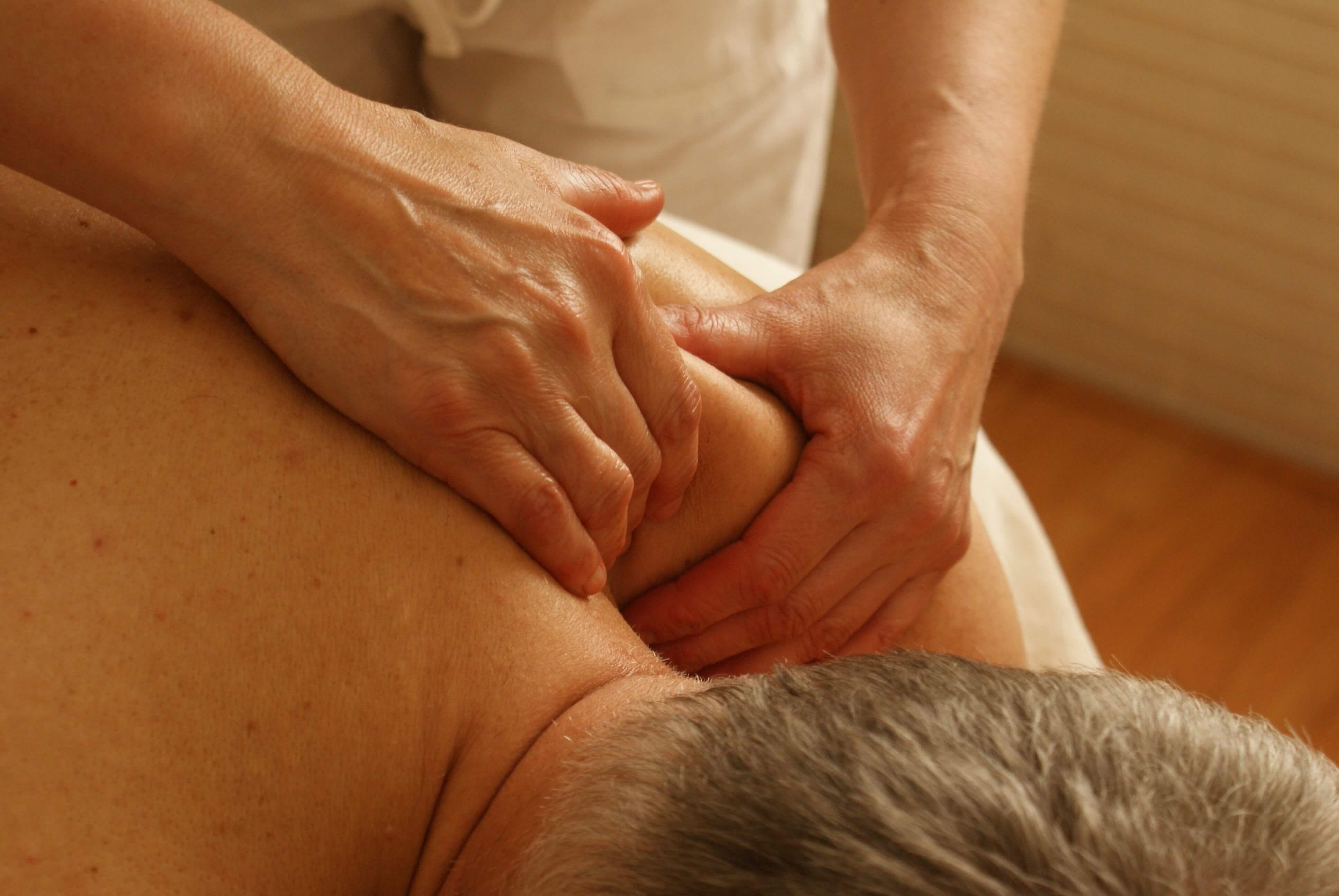
What happens during your massage
Pinpoint the tight spots
Before you lie down, we ask where you feel it most and what makes it worse. Desk work, long drives and carrying a toddler on one hip each leave a different pattern of tightness.
Warm the muscle first
Broad, lighter strokes go across the back before any deep work starts. Jumping straight in with heavy pressure tends to make people brace, which defeats the point.
Slow, focused pressure
Forearms and knuckles move slowly along the muscle and pause on knots. You will be asked how the pressure feels, and a score out of ten is an easy way to answer.
Ease out
The last few minutes return to longer, lighter strokes so you do not leave feeling raw. Get up slowly and give yourself a minute before you put your coat on.
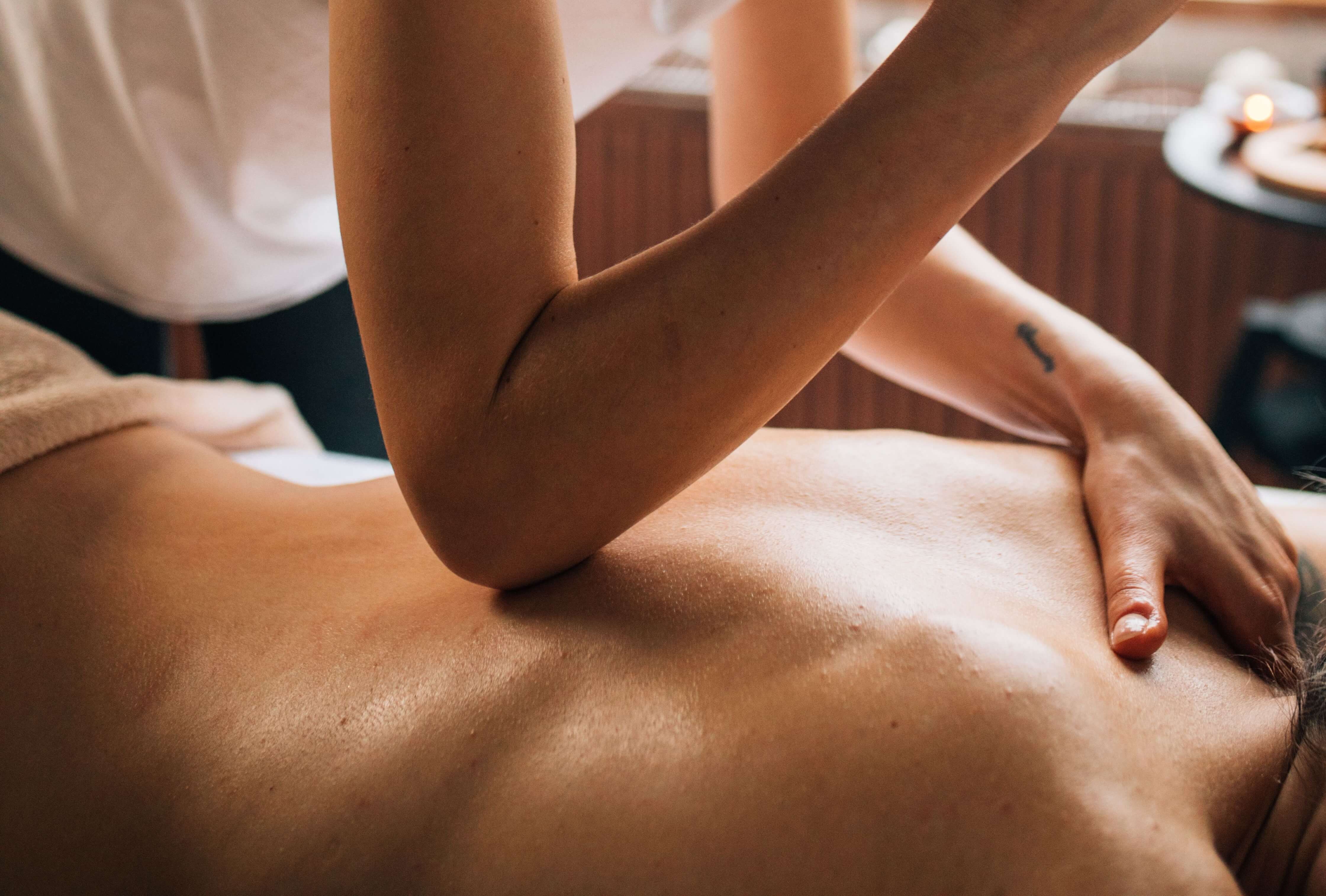
Deep tissue is about speed, not force
A common worry is that deep tissue means being pressed as hard as possible. It does not. Depth comes from going slowly, letting the muscle soften under steady pressure before moving further in. Rush it and the muscle pushes back. Wait, and the therapist can usually reach deeper with less effort, which feels far more bearable.
Expect a strong, satisfying ache, the sort people call good pain. What you should not feel is sharp, stabbing or burning pain, or the urge to hold your breath. If your jaw clenches or your toes curl, the pressure is too much. Say so, and it will be adjusted.
How it compares with Swedish and sports massage
Swedish massage uses long flowing strokes to relax the whole body with lighter pressure. Deep tissue borrows some of the same strokes but spends far longer on a few areas, with much more weight behind them. If you mainly want to drift off for an hour, Swedish is the better pick.
Sports massage and deep tissue overlap a great deal, and the main difference is the reason for booking. Sports massage is planned around training and the muscles a sport works hardest. Deep tissue is planned around where everyday life leaves you tight, which for most people means the upper back, neck and hips.
The day after a deep tissue massage
Feeling a little tender the next day is common, rather like after a new workout. It usually settles within a day or two. Drinking water, a warm shower and a short walk often help it pass. Now and then a small bruise appears where the work was deepest, especially on people who bruise easily.
Try not to book deep tissue the day before something where you need to feel your best, such as a race, a wedding or a long flight. Leave a few days between them. If soreness is severe, or lasts longer than you would expect, speak to your GP.
Deep tissue massage prices
A typical guide for Wimbledon. We confirm your exact price when we reply.
Deep tissue massage questions
Does deep tissue massage hurt?
It can feel intense in the tightest spots, but it should stay on the right side of uncomfortable. You stay in control of the pressure throughout. Tell us straight away if anything feels sharp, and the therapist will slow down or move to another area.
How long should a deep tissue massage be?
For one area, such as the shoulders and neck, 30 or 45 minutes is often enough. For the whole back plus the legs, 60 minutes gives room to warm up and work slowly. Choose 90 minutes if you want deep work across the whole body.
How often should I have a deep tissue massage?
There is no fixed rule. Some people book once a month to keep on top of desk tightness. Others come every week or two for a short spell while their back is especially stiff, then space visits out. Notice how long the benefit lasts for you.
Can I have deep tissue massage if I bruise easily?
Tell us before booking. If you bruise easily or take blood thinning medication, check with your GP first. The pressure can be kept firmer than a relaxing massage but lighter than full deep tissue, which many people find a good middle ground.
Is deep tissue just a firm massage?
Not quite. A firm massage puts more pressure through the usual relaxing strokes. Deep tissue changes the technique as well, slowing right down and using forearms and knuckles to work into specific knots. It is more targeted and usually covers fewer areas in the same time.
You may also like
All treatments
Sports massage
Firm, targeted work planned around your training and your sport
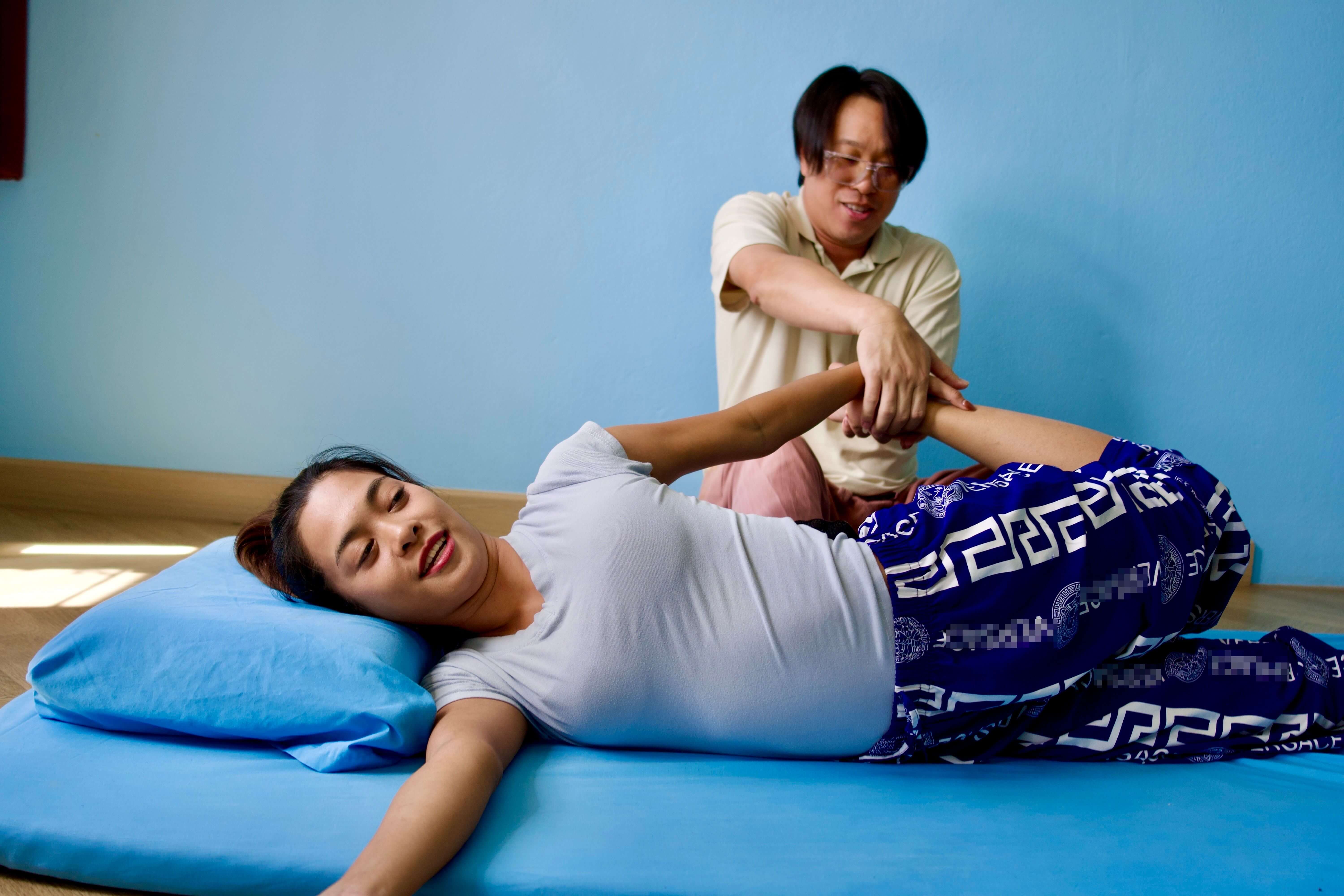
Thai massage
Assisted stretches and rhythmic palm pressure, given fully clothed
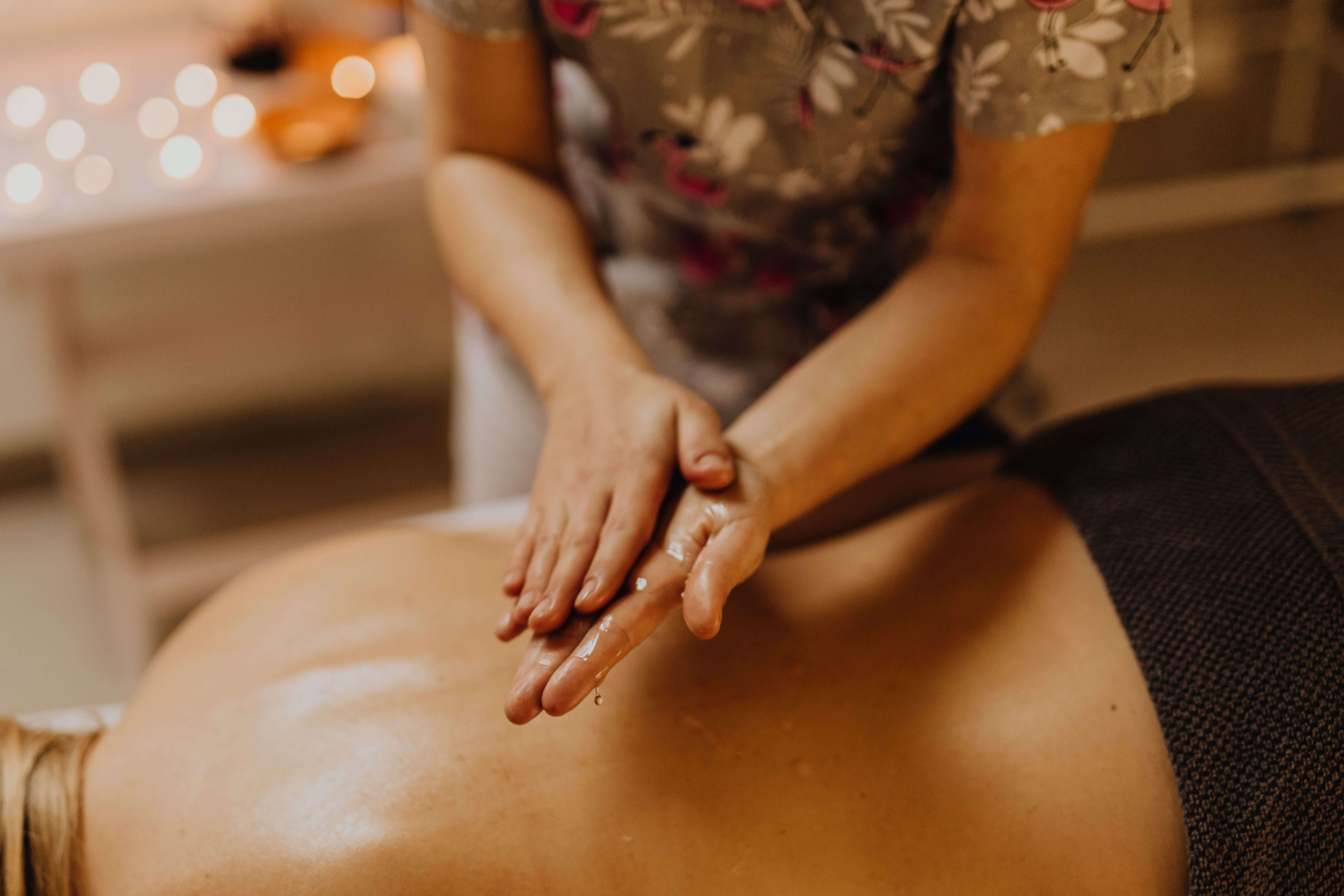
Swedish massage
A relaxing full body massage with long, flowing strokes
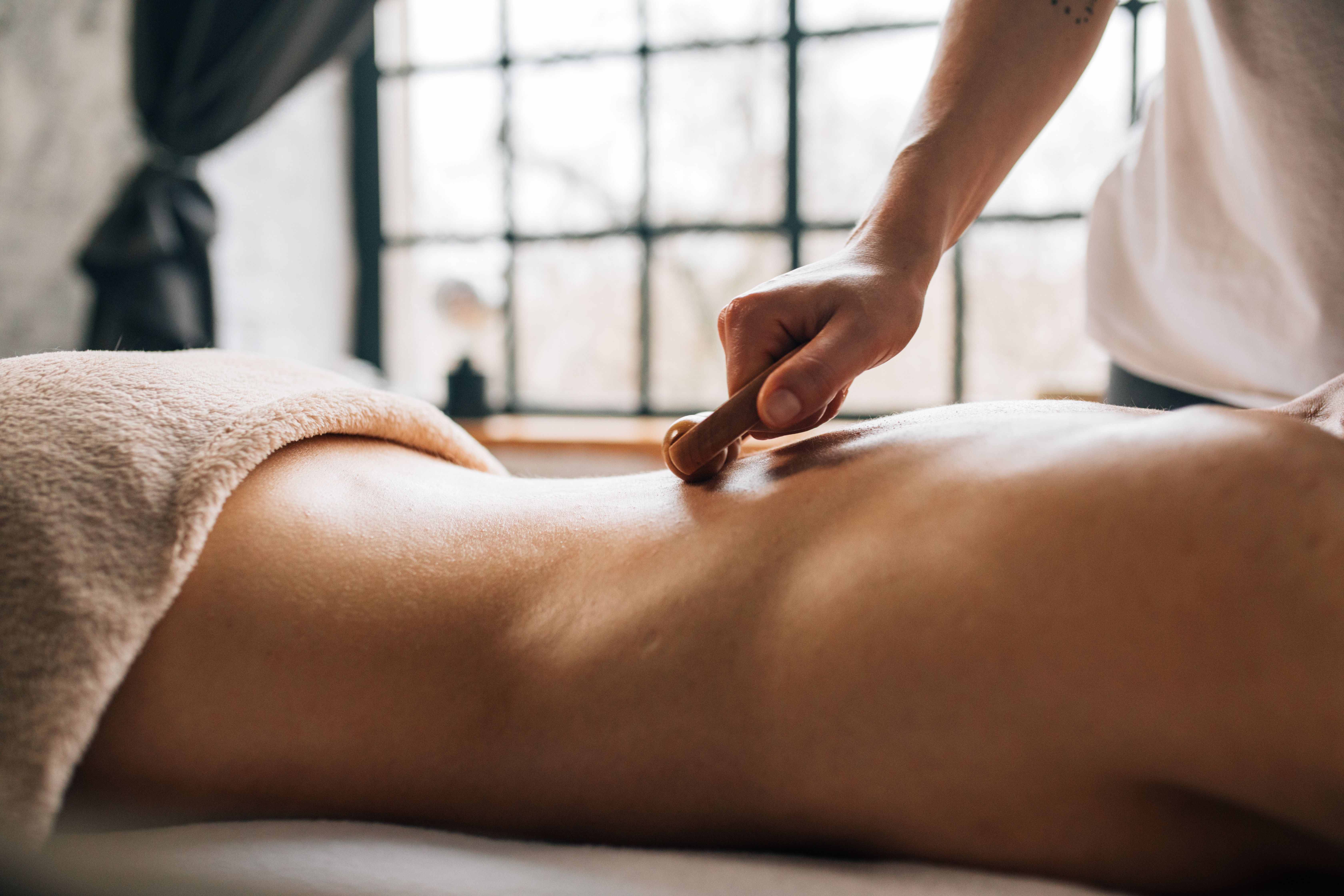
Chinese massage
Brisk Tui Na style kneading with pressure on acupressure points
Deep tissue massage near you
Book your deep tissue massage
Tell us what you would like and when. It takes under a minute.